
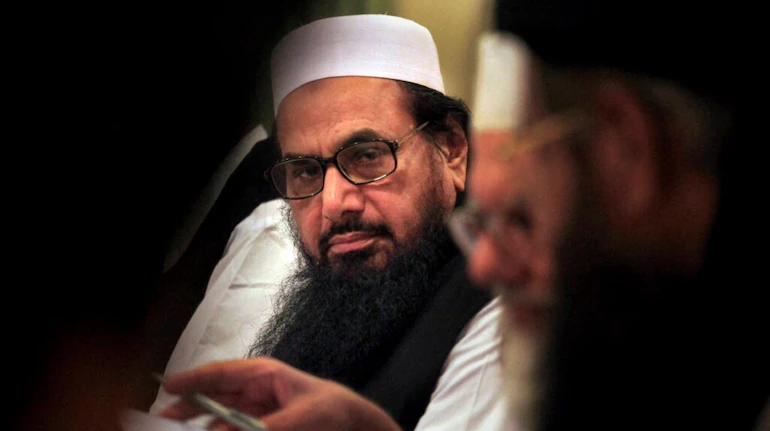
Hafiz Saeed named in NIA’s latest Pahalgam chargesheet. Here’s what investigators say about Pakistan’s role
Hafiz Saeed named in NIA’s latest Pahalgam chargesheet. Here’s what investigators say about Pakistan’s role
The NIA’s latest chargesheet names Hafiz Saeed as an accused in the Pahalgam attack case. It outlines evidence pointing to an alleged Pakistan-backed terror conspiracy.
NIA has charged LeT chief Hafiz Saeed in a supplementary chargesheet for masterminding the Pahalgam terror attack, which killed 26. The chargesheet details Pakistan’s cross-border conspiracy and Saeed’s role in waging war against India.
6715 Posts: IBPS Recruitment 2026, Apply Online
More than a year after the deadly Pahalgam terror attack that killed 26 people, the National Investigation Agency (NIA) has formally named Lashkar-e-Taiba (LeT) chief Hafiz Saeed as an accused in its supplementary chargesheet, alleging that he masterminded the cross-border conspiracy behind one of the deadliest attacks on civilians in Jammu and Kashmir in recent years.
The supplementary chargesheet, filed before the NIA Special Court in Jammu, expands upon the agency’s earlier investigation by detailing Pakistan’s alleged role in planning the attack, Hafiz Saeed’s involvement and the evidence collected during the probe. It comes months after the NIA filed its original 1,597-page chargesheet naming Pakistani handlers, terrorists and arrested accused in the case.
Why has Hafiz Saeed been chargesheeted?
According to the NIA, Hafiz Saeed has been charged both in his individual capacity and as the chief of the banned Lashkar-e-Taiba as well as its proxy outfit, The Resistance Front (TRF).
The agency has invoked provisions of the Bharatiya Nyaya Sanhita (BNS), 2023 and the Unlawful Activities (Prevention) Act, 1967.
🎓 Explore Jobs by Qualification
Explore the latest job opportunities in J&K and across India based on your educational qualification.
The chargesheet also accuses Saeed of waging war against India and conspiring from Pakistani territory to execute the attack.
According to the NIA statement, the supplementary chargesheet contains details of “Pakistan’s conspiracy”, Saeed’s role and evidence gathered through scientific examination and field investigation.
What happened in the Pahalgam attack?
The attack took place on April 22, 2025, at the Baisaran meadow near Pahalgam, a popular tourist destination in Jammu and Kashmir.
Pakistan-sponsored terrorists opened fire on tourists, killing 25 visitors and one local resident.
The attack triggered nationwide outrage and was followed by India’s military response under Operation Sindoor, during which Indian armed forces struck multiple terror infrastructure sites across Pakistan and Pakistan-occupied Kashmir.
Indian Army Recruitment 2026
Initially, an FIR was registered at Pahalgam police station before the Union Home Ministry transferred the investigation to the NIA.
Who has been named so far?
The supplementary chargesheet builds upon the original chargesheet filed on December 15, 2025.
In that filing, the NIA named Pakistani handler Sajid Jatt as an accused along with three terrorists who were later killed during Operation Mahadev in July 2025.
Two arrested accused were also chargesheeted.
The agency additionally named the banned LeT and its proxy organisation TRF as legal entities responsible for planning, facilitating and executing the attack.
How was the attack allegedly planned?
The earlier chargesheet mapped the movements of the attackers for months before the strike and suggested they were able to travel across mountainous terrain and populated areas without attracting attention.
According to details reported from the chargesheet, the terrorists allegedly received weapons, cash and explosives through cross-border drone drops instead of relying solely on traditional infiltration routes.
The NIA stated that an early-2024 drone drop in the Gogal Dara forests of Baramulla allegedly delivered 20 pistols, Rs 15 lakh in cash and Chinese-made triangular grenades to the terror module.
Investigators believe the use of drones represented a significant shift in terror logistics, enabling operatives to receive supplies deep inside Kashmir while bypassing conventional border surveillance.
Intelligence gaps highlighted during investigation
The investigation has also drawn attention to challenges in intelligence gathering before the attack.
According to reports based on the chargesheet, security experts pointed to a decline in ground-level human intelligence networks between 2022 and 2024, arguing that the reduced flow of local intelligence may have enabled the terror cell to move undetected across the Valley.
The reports also noted concerns over increasing reliance on technical surveillance and the need to strengthen local intelligence networks in remote areas.
Investigation continues
The NIA said the investigation into the larger conspiracy is still underway.
“NIA continues to probe the case to unravel the complete conspiracy by Pakistan, which has been actively sponsoring terrorism on Indian soil from across the border,” the agency said.
Officials say the probe remains focused on identifying the complete network of planners, handlers, facilitators and logistical support involved in carrying out the Pahalgam terror attack.