
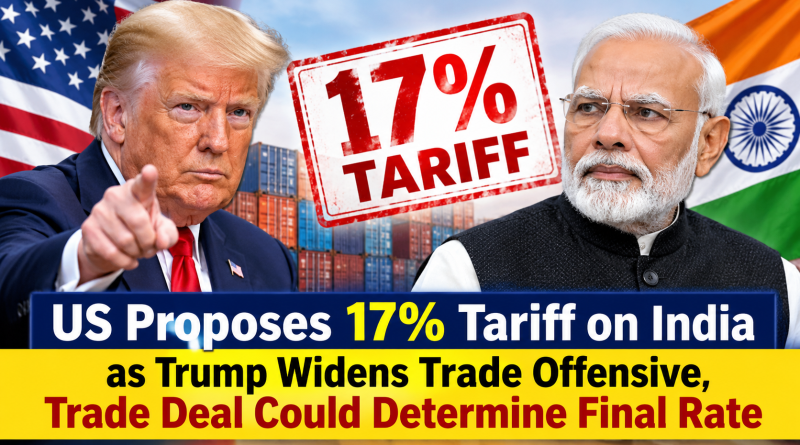
US proposes 17% tariff on India as Trump widens trade offensive, trade deal could determine final rate
US proposes 17% tariff on India as Trump widens trade offensive, trade deal could determine final rate
The Trump administration has proposed a 17 per cent tariff on Indian goods following a US investigation into excess manufacturing capacity.
The proposed duties will undergo public consultation and could take effect as early as January.
The US proposed a 17% tariff on Indian goods amid new trade measures targeting 14 economies for excess manufacturing capacity and oversupply.
Following a USTR investigation, the proposed duties across multiple industries face public consultation before January.
The US proposed a 17% tariff on Indian goods amid new trade measures targeting 14 economies for excess manufacturing capacity and oversupply.
Following a USTR investigation, the proposed duties across multiple industries face public consultation before January.
The United States has proposed a 17 per cent tariff on Indian goods as part of a fresh set of trade measures announced by President Donald Trump’s administration following an investigation into excess manufacturing capacity and production among major trading partners. The proposed duty places India among 14 economies facing additional tariffs under Washington’s latest effort to reshape global trade relationships.
🎓 Explore Jobs by Qualification
Explore the latest job opportunities in J&K and across India based on your educational qualification.
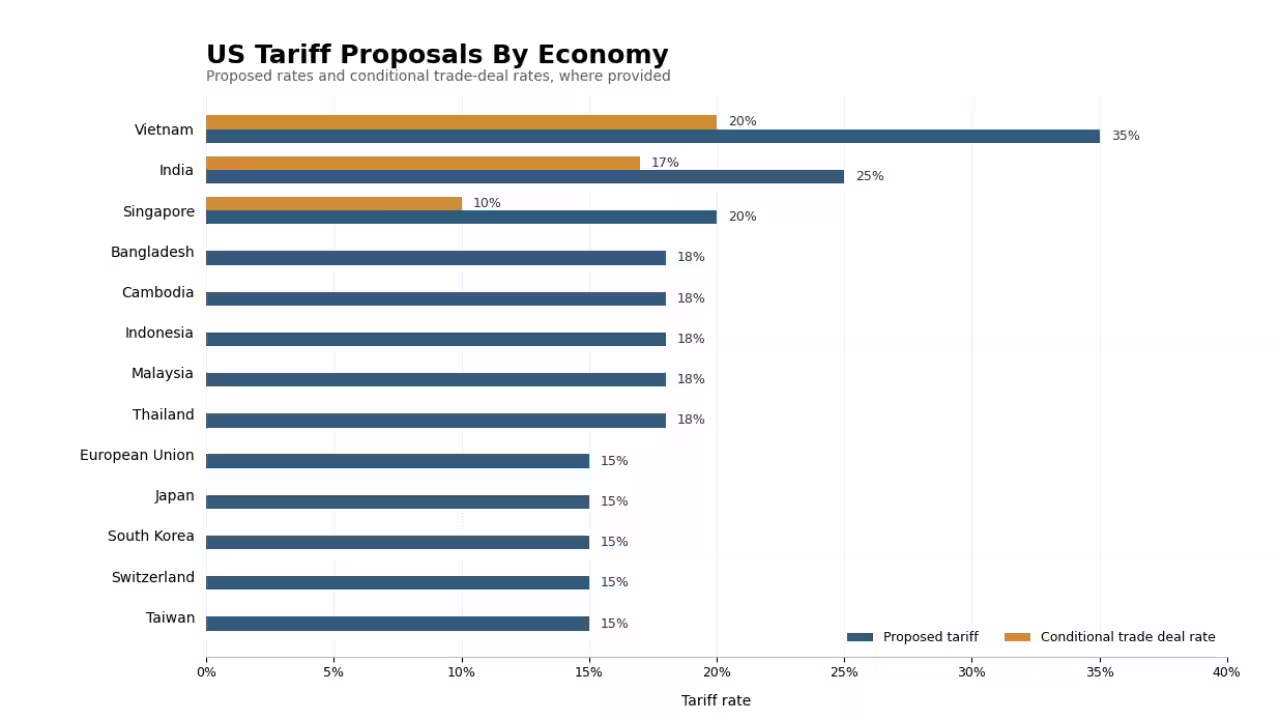
The proposal follows a months-long investigation launched by the US Trade Representative in March. Washington has proposed tariffs of up to 25 per cent on Indian goods, with the rate set to come down to 17 per cent if New Delhi signs a trade deal with the Trump administration, according to the tariff list released by the USTR. The US has alleged that the countries under investigation are promoting manufacturing capacity and production beyond actual market demand, creating an oversupply of goods and affecting American commerce.
The proposed tariffs will now go through a period of public consultation before they can take effect, with January being the earliest possible timeline, according to a US official.
Why has the US proposed a 17% tariff on India?
A senior US official said the investigation examined whether other economies were taking actions considered unreasonable or discriminatory and whether these practices were affecting US trade.
The official alleged that the countries concerned were “promoting production and capacity divorced from the realities of demand and market principles”.
The investigation covers several industries, including batteries, cement, chemicals and processed food. According to the US administration, excess manufacturing capacity can result in an oversupply of goods, push prices down and weaken domestic manufacturing in the United States.
Trade lawyer Ryan Majerus told AFP that the investigation could become one of the most important actions taken by the Trump administration. He said the concern was that factories with excess capacity could begin operating abroad and “never get turned off, even if there’s no demand”.
The US has proposed tariffs of up to 20 per cent on the European Union and China. Other economies facing proposed duties include Japan, South Korea, Vietnam, Thailand, Taiwan, Bangladesh, Indonesia, Malaysia, Singapore, Switzerland and Cambodia.
When could the new tariff on India take effect?
The proposed tariffs will not come into force immediately. They must first undergo a period of public comment, allowing affected parties to respond before the US administration finalises the measures.
A senior US official said the new duties could take effect in January at the earliest. The proposals also take existing trade agreements into account, potentially offering some relief to countries that have already negotiated tariff arrangements with Washington.
The official said the administration did not expect the announcement to create tensions ahead of the G20 summit in Miami in December and indicated that more trade agreements could be signed around the meeting.
Will the proposed duty be added to existing US tariffs?
The latest proposal also comes after the US Supreme Court struck down Trump’s earlier global tariffs in February, ruling that the president did not have the authority to impose those duties under the law cited by the White House.
However, sector-specific tariffs imposed by the administration, including those on automobiles and steel, remain in place.
The senior US official said the newly proposed excess-production tariffs would not be added on top of these sector-specific duties. They would also not stack with the separate tariffs imposed in July on 60 economies over allegations of insufficient action against forced labour. Where both sets of measures apply, the higher tariff rate would prevail.
The proposed 17 per cent duty on India is therefore part of a fresh trade investigation rather than an immediate additional levy on top of every existing US tariff.